Table Of Content

This structured approach paves the way for efficient problem-solving. It ensures a class has only one instance and provides a global point to access it. The code above shows the "lockThis" object and the use of locking within the "GetInstance" method. Since programs can be multithreaded, it is possible that two threads could request the singleton before the instance variable is initialized. By locking the dummy "lockThis" variable, all other threads will be blocked. This means that two threads will not be able to create their copies of the object simultaneously.
4 Memento Method Design Patterns in C++
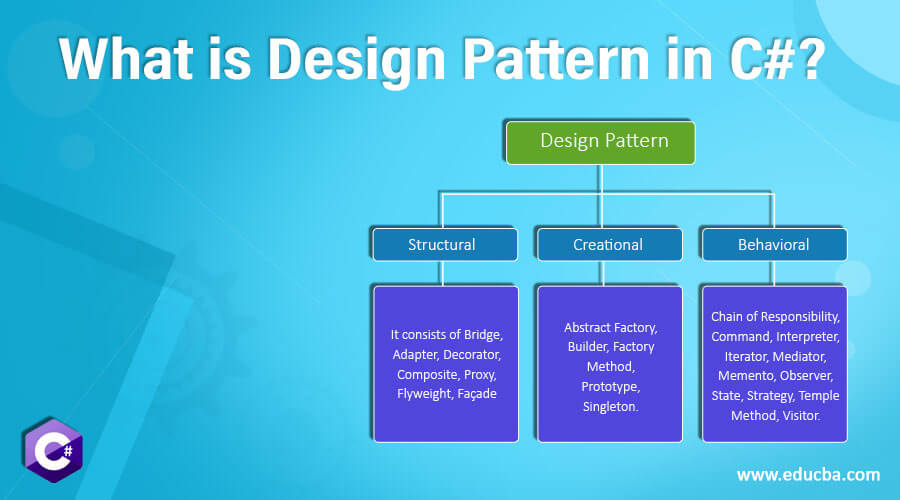
This article introduces design patterns and how design patterns are implemented in C# and .NET. JavaScript design patterns are the reusable solutions that are applied to commonly occurring issues/problems in writing JavaScript web applications. These patterns actually help to write organized, beautiful and well-structured codes. So, Design patterns are reusable solutions to common problems that occur in software design. They represent best practices and have evolved over time through trial and error by experienced software developers. Design patterns can be thought of as templates for solving particular design problems rather than finished designs that can be transformed directly into code.
C++ Design Patterns
You can be much more sophisticated than this by using sets of functions (vtables) to represent the pertinent properties of a type so that a generic routine can process it usefully. For example, the read, write, etc. calls on an open file, or network port. The Adapter design pattern follows the Single Responsibility Principle (SRP) and Open-Closed Principle (OCP). If you are unfamiliar with these concepts, please check out my article on SOLID Principles in Flutter Development.
Hollow Inverted Full Pyramid Pattern
Architectural patterns describe the fundamental structure of a software system and are often based on design patterns. The core idea behind the Factory Pattern is to delegate the responsibility of object instantiation to individual factories. This abstraction of creation ensures flexibility, enabling easier integration of new types without altering existing code. The Factory Pattern provides an interface for creating instances of a class, with its subclasses deciding which class to instantiate. They provide frameworks for addressing common challenges, allowing developers to focus on the unique aspects of their projects.
Types of Design Patterns
Top 10 Programming Language You Must Know / Sandbox - Хабр
Top 10 Programming Language You Must Know / Sandbox.
Posted: Tue, 09 Jun 2020 07:00:00 GMT [source]
You can create a library of decorator classes and apply them to different objects and classes as needed, reducing code duplication. It allows you to add or remove responsibilities (i.e., behaviors) from objects at runtime. This flexibility makes it easy to create complex object structures with varying combinations of behaviors.
This pattern treats both individual objects and compositions of objects it allow clients to work with complex structures of objects as if they were individual objects. Abstract Factory Method is a creational design pattern, it provides an interface for creating families of related or dependent objects without specifying their concrete classes. Factory Method is a creational design pattern, that provide an interface for creating objects in superclass, but subclasses are responsible to create the instance of the class.
Explanation of the above code:
Proxy means ‘in place of’, representing’ or ‘in place of’ or ‘on behalf of’ are literal meanings of proxy and that directly explains Proxy Design Pattern. They are closely related in structure, but not purpose, to Adapters and Decorators. There are clear similarities between Staging and Production deploys, so you can create a template for both of them to use. You don’t want to migrate all your code to Client B, because you’ve heard that Client A will soon start supporting newer versions and Client B overall uses more memory than Client A. For example, it uses the name read instead of consume and uses the name write instead of produce. You can use this if you are sure you’ll use getInstance() at least one time in your application.

The base class is declared Abstract so that other concrete factory subclasses can inherit it. Chain of responsibility pattern is used to achieve loose coupling in software design where a request from the client is passed to a chain of objects to process them. Later, the object in the chain will decide themselves who will be processing the request and whether the request is required to be sent to the next object in the chain or not. Design Patterns are nothing but, you can say, documented and tested solutions for recurring problems in a given context. So, in simple words, we can say that Design Patterns are reusable solutions to the problems that, as a developer, we encounter in our day-to-day programming. Design Patterns are used to solve the problems of Object Generation and Integration.
In Factory Method,Pizza and Burger needed to be in type Meal,here it’s not compulsory. Factory Method helps you to select between pizza and burger by overriding a method but keeps non-varying parts in a common method. As your app grows larger, you may want to add new functionalities, such as weather information. Suppose you are building a social media app and implementing it for multiple platforms. Suppose you are writing a software that will show weather forecasts but you want to store the user information in a database and weather information in another database. So my first bit of advice is stop thinking of it as procedural programming.
Facade defines a high-level interface that makes the subsystem easier to use. There is also another concept called Hooks.Hooks are methods in abstract classes that can be overriden, but not have to. It would be best if you do all the configurations inside a method and just call that method from client code for simplified usage. In Factory Method, only a single method was responsible of creation of a pizza, here we have separate methods for separate pizzas, so whole class is responsible. If both Meals have a common method regardless of their type, you can turn MealFactory to abstract class instead of an interface.
If this is unclear now, don’t worry; we will discuss Creational Design Patterns in detail in our upcoming articles. You need to remember that the design patterns are for projects, and projects are not for patterns. I saw many developers enforcing the design pattern in their projects even though the design pattern is not required, making the project messy. Provides an interface for creating objects in a superclass, but allows subclasses to alter the type of objects that will be created. The Decorator pattern promotes a clear and structured design, making it easier for developers to understand how different features and responsibilities are added to objects.
10 Fantastic Pattern Books for Children – PRINT Magazine - PRINT Magazine
10 Fantastic Pattern Books for Children – PRINT Magazine.
Posted: Mon, 20 May 2013 07:00:00 GMT [source]
When using the Decorator pattern, you often end up with a large number of small, specialized decorator classes. This can lead to a proliferation of classes in your codebase, which may increase maintenance overhead. These are only the main parts of the terminology I will write about. I also will write about additional aspects of patterns, such as their advantages and disadvantages, history, and structure. Hourglass Pattern is a combination of the inverted full pyramid and full pyramid patterns but in the opposite sense to that of diamond pattern. This pattern is the 180° flipped version of the left half pyramid pattern we discussed earlier.
This pattern provides ways to decrease object count thus improving application required objects structure. Flyweight pattern is used when we need to create a large number of similar objects. The adapter pattern convert the interface of a class into another interface clients expect. Adapter lets classes work together that couldn’t otherwise because of incompatible interfaces. The Factory Method pattern is used to create objects without specifying the exact class of object that will be created.
Suppose you have a music player in your car that only supports cassettes, but you want to listen to music from your smartphone. The adapter has an interface compatible with the cassette player and provides an interface for your smartphone to use. The order in which decorators are applied can affect the final behavior of the object. If decorators are not applied in the correct order, it can lead to unexpected results. Managing the order of decorators can be challenging, especially in complex scenarios.


No comments:
Post a Comment